Most resort managers think about hydro cleaning the wrong way. They treat it as a guest-comfort upgrade. Something that makes rooms smell better during winter. That framing misses the real financial exposure sitting inside their HVAC systems right now.
A winter hydro clean is actually a risk-management decision. It protects three things at once: equipment lifespan, energy costs, and legal liability. Guest comfort is a side effect, not the point.
The Real Mechanism Behind Winter Breakdowns
Gold Coast humidity swings hard between seasons. Summer keeps coils constantly wet and running. Winter introduces long idle periods mixed with sudden heating cycles. This combination is what actually damages equipment.
When a unit sits idle with residual moisture and biofilm on the coil, corrosion accelerates. Metal fatigue starts well before visible rust appears. Facilities managers rarely see this stage. They only see the compressor failure six months later, in peak season, when it costs the most to fix.
For a deeper breakdown, refer to this article: https://deepchill.com.au/why-gold-coast-resorts-need-a-winter-hydro-clean/
That timing is not a coincidence. Neglected coils fail under load, not at rest. A resort that skips winter maintenance is quietly setting up a summer emergency call-out, at premium rates, during the worst possible week to be short an AC unit.
Energy Cost Is The Silent Line Item
Biofilm and dust buildup inside a coil do more than harbour mould. They reduce heat transfer efficiency. A coil operating at even 15% reduced efficiency forces the compressor to run longer to hit the same setpoint.
Multiply that across forty or fifty units in a resort, running most of the day, every day. The energy cost difference between a clean coil and a neglected one is not trivial. It shows up on the power bill as a slow, invisible tax that nobody investigates until someone finally audits usage against occupancy.
This is the part standard filter changes cannot fix. Filters catch surface dust. They do nothing for the internal fan barrels and coil surfaces where biofilm actually forms. That is a mechanical cleaning problem, not a filter problem.
The Liability Angle Most Managers Ignore
Poor indoor air quality is not just a guest satisfaction issue. It is a documented occupational health exposure for hotel staff who work in these rooms every day. Housekeeping staff spend hours in rooms with recirculated air far more than any single guest does.
Under Queensland work health and safety obligations, employers carry a duty of care around air quality in workplaces, including hotel rooms staff service repeatedly. A mould-contaminated HVAC system is a compliance question as much as a comfort one. Nobody wants that conversation happening after a WorkCover claim, when the maintenance log shows the last hydro clean was fourteen months ago.
Insurance and warranty terms often carry similar weight. Manufacturer warranties on commercial units typically require documented maintenance intervals. A voided warranty because of a skipped seasonal clean is a five-figure mistake that never needed to happen.
Why Winter Specifically, Not Just “Regular Maintenance”
Some facilities managers push all AC servicing into one annual slot, usually before summer. That approach misses the accumulation pattern. Summer usage builds up the grime. Winter’s idle-then-heat cycle is what spreads it and where corrosion actually accelerates.
Servicing before winter, not after, interrupts that cycle at the right point. It removes the accumulated summer residue before the seasonal heating cycle spreads it through the room and stresses the coil with condensation and idle corrosion simultaneously.
This is why timing the service to the season, not the calendar year, matters more than most maintenance schedules acknowledge. A single annual service in September does nothing to address what builds up between June and August.
What A Proper Hydro Clean Actually Involves
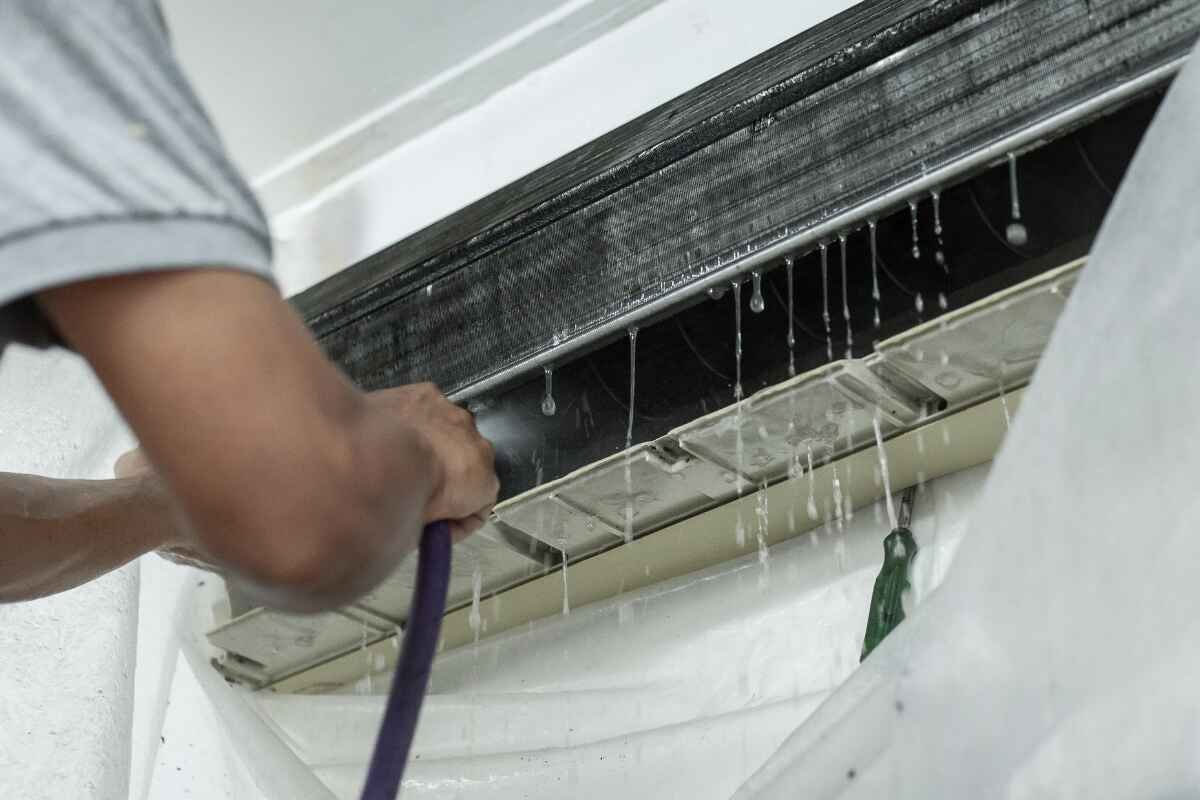
A real hydro clean uses controlled high-pressure water to flush internal components, not just wipe surfaces. Combined with a biodegradable, plant-based sanitising treatment, it addresses both the physical buildup and the biological contamination in one pass.
This is fundamentally different from a filter swap or a surface wipe-down. It reaches the fan barrels, the coil fins, and the drainage components where biofilm actually establishes itself. Skipping this step and relying on filters alone is why so many “well-maintained” systems still develop mould problems.
The Actual Decision Facilities Managers Are Making
Every winter, a resort operator makes a choice, whether they realise it or not. Spend a modest, predictable amount now on a proper hydro clean. Or defer that cost and absorb a much larger, unpredictable one later, split across energy waste, warranty risk, staff health exposure, and eventual equipment replacement.
Framed that way, the decision is not really about guest experience at all. It is asset depreciation management. Every commercial HVAC system has a maintenance curve that determines whether it lasts twelve years or twenty. Winter servicing sits directly on that curve.
Resorts operating at scale, with dozens of units running continuously, cannot afford to treat this as optional housekeeping. The math on deferred maintenance rarely favours waiting.
Source: https://deepchill.com.au/why-gold-coast-resorts-need-a-winter-hydro-clean/