Most climate decisions in childcare are made from an adult’s height. Someone stands in the doorway, feels the air and decides whether the room is comfortable. Yet the children in that room spend their day somewhere else entirely. They sit on mats, crawl across floors and nap close to the ground.
This gap shapes everything. A childcare and early learning centre is not an office with smaller furniture. Its rooms change purpose several times a day. Its occupants cannot tell you they feel cold or stuffy. And its operators answer to regulators, families and staff at the same time.
This article looks at heating, cooling and ventilation from an operational angle. The focus is on how room use, child physiology and daily routines should drive system design and maintenance.
Why the Floor Is the Real Comfort Zone
Warm air rises. In a typical room with a ceiling-mounted heater, the air near the ceiling can be several degrees warmer than the floor. Adults rarely notice this difference. A toddler on a play mat feels it constantly.
This explains a common complaint from educators. The thermostat reads 22°C, but children still seem restless or cold. The reading is accurate at the wall sensor. It simply does not describe the air where children live.
The practical response starts with air distribution, not more heating capacity. Ducted systems with low-level returns help pull warm air downward. Ceiling fans on a slow reverse setting push stratified heat back towards the floor. Floor-mounted or console units can also suit rooms where infants spend most of their time on the ground.
Sensor placement matters just as much. Moving a temperature sensor lower, or adding a remote sensor, gives the system a more honest picture. The result is less guesswork and fewer manual overrides by staff.
Every Room Has a Different Job
Nursery and Sleep Rooms
Infant rooms need stable, gentle conditions more than powerful ones. Babies regulate body temperature less effectively than older children. Sudden blasts of hot or cold air can disturb sleep and cause discomfort.
Sleep rooms also have a quiet requirement. A noisy outdoor unit or rattling vent can undo a carefully planned rest routine. Inverter-driven systems that run at low, steady output tend to suit these spaces well. They avoid the on-off cycling that creates noise and temperature swings.
Play and Activity Rooms
Active play generates heat quickly. Twenty children moving around a room can lift its temperature noticeably within minutes. A room that felt cool at drop-off may feel warm by mid-morning.
Here the system needs to respond fast. Zoning allows the play room to cool down while the sleep room next door stays warm. Without zoning, centres often end up heating one space and overheating another.
Kitchens and Nappy Change Areas
These areas create moisture and odours. They need strong extraction rather than simple temperature control. Poor extraction lets humidity spread into nearby rooms. Over time that humidity can encourage condensation and mould on cold surfaces.
Ventilation Is a Health Decision, Not a Comfort Upgrade
Closed doors and windows keep heat in during winter. They also trap carbon dioxide, airborne germs and moisture. Children breathe faster than adults relative to their body size. They take in more air, and more of whatever is in it.
High carbon dioxide levels are linked to drowsiness and reduced concentration. In a learning environment, that cost is real. Educators may notice children becoming irritable or sluggish by early afternoon without knowing why.
Fresh air intake and filtration should therefore be part of the design brief from the start. Systems with outdoor air supply can bring in fresh air without dumping heat. Higher-grade filters capture more fine particles, though they need more frequent changes.
A simple carbon dioxide monitor in each main room can guide decisions. It turns an invisible problem into a number staff can act on. It also gives operators evidence to share with families who ask about air quality.
For a deeper breakdown of keeping rooms warm and healthy through the cooler months, refer to this article: https://deepchill.com.au/childcare-and-early-learning-centre-air-conditioning-warm-healthy-rooms-through-winter/
Maintenance That Fits the Operating Day
Scheduling Around Children
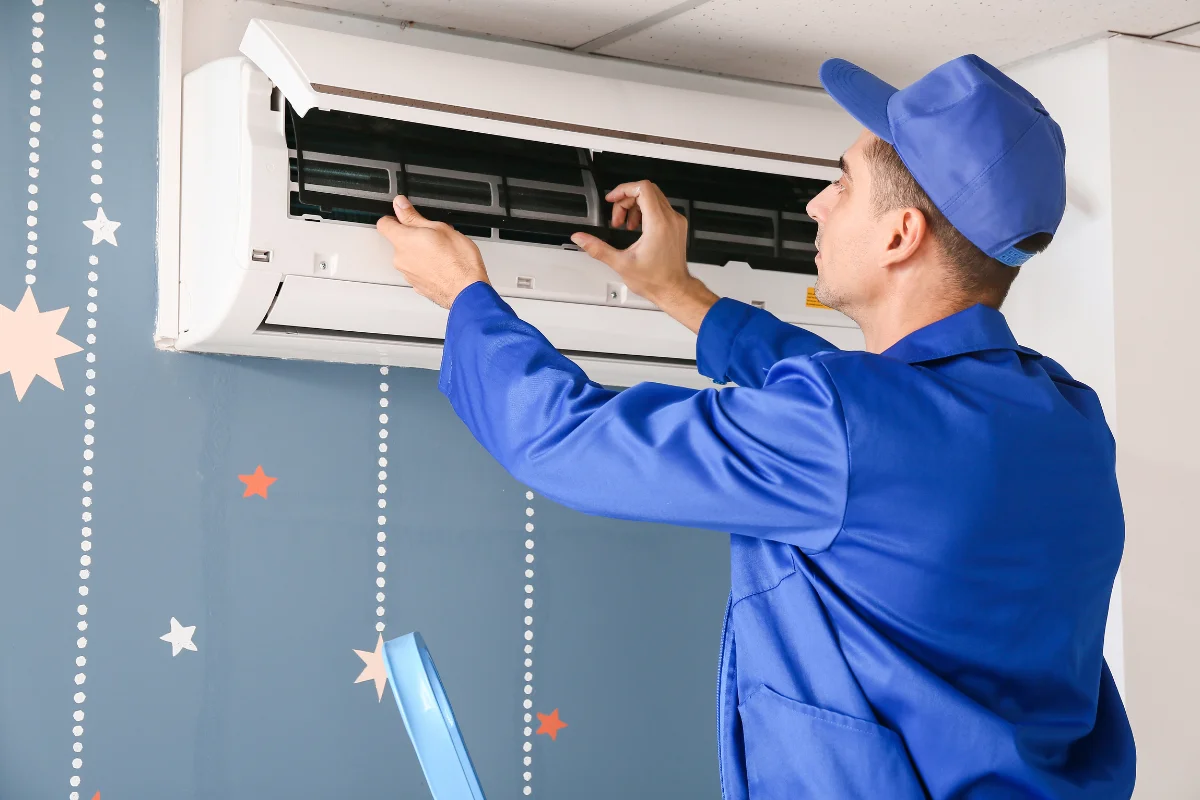
Childcare centres cannot shut down for a day of servicing. Maintenance must work around opening hours, sleep times and peak drop-off periods. The best approach is planned servicing before each season changes.
Pre-winter servicing checks heating performance before demand peaks. Pre-summer servicing does the same for cooling. Both should include filter cleaning, coil inspection and drainage checks.
The Hidden Cost of Dirty Filters
A clogged filter forces the system to work harder for the same result. Energy bills rise, and airflow drops. More importantly, the filter stops doing its job of capturing dust and allergens.
In a centre with many children, filters load up faster than in a home. Lint, dust and skin particles accumulate quickly. Monthly visual checks by staff, combined with professional servicing, keep this under control.
Record Keeping
Maintenance logs do more than track repairs. They show regulators and families that air quality is managed deliberately. They also reveal patterns, such as a unit that fails every winter. Those patterns guide smarter replacement decisions.
Thinking in Lifecycle Cost
Upfront price often drives HVAC choices in childcare. That approach can backfire. A cheaper system that runs inefficiently may cost far more over ten years.
Running costs, servicing frequency and expected lifespan all belong in the comparison. Inverter technology usually costs more initially but uses less energy at partial load. Since most childcare rooms rarely need full capacity, that efficiency adds up.
Zoning has a similar payoff. Heating only occupied rooms avoids paying to warm empty spaces. Smart controls and timers prevent systems running overnight or over weekends by mistake.
Operators should also plan for growth. Adding rooms or increasing capacity later is easier when the original system allows expansion.
Conclusion
Good climate control in a childcare and early learning centre starts with a shift in perspective. The question is not whether the room feels comfortable to an adult. It is whether the air works for a child on the floor, at nap time, after an hour of active play.
That shift leads to better decisions. Distribution matters more than raw capacity. Zoning matters more than one central thermostat. Ventilation matters as much as temperature. And steady maintenance protects both health and budgets.
Centres that design around real room use create calmer, healthier spaces. Children rest better, educators work more comfortably, and families gain confidence. That outcome is worth far more than a lower installation quote.