Why Home Cooking May Be One of the Most Underrated Tools Against Cognitive Decline
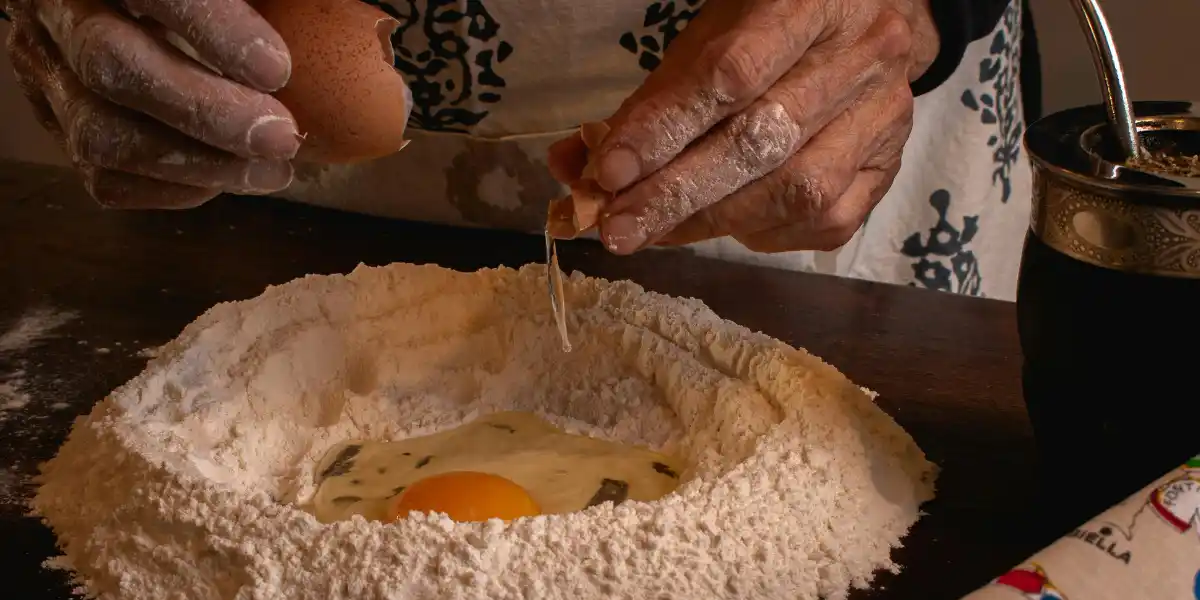
We tend to frame the conversation about dementia prevention around what we eat. Omega-3s, leafy greens, the Mediterranean diet, the MIND diet. But there is a quieter, more interesting variable hiding in plain sight: the act of cooking itself. Not the meal on the plate, but the forty minutes of decision-making, sequencing, and sensory processing that produced it.
This distinction matters more than it sounds. Because if the protective effect lives partly in the doing, then outsourcing your meals to delivery apps may be costing you something that no supplement can replace.
The Brain Treats Cooking Like a Workout
Cooking is one of the few everyday activities that simultaneously engages executive function, working memory, motor coordination, and sensory integration. You are reading a recipe, estimating timing, adjusting seasoning by taste, watching for visual cues like browning, and coordinating two or three parallel processes. Neurologically, this looks less like a chore and more like a structured cognitive drill.
Compare this to scrolling through a food app. The cognitive load is near zero. You tap, you wait, you eat. The meal might even be nutritionally identical to one you would have cooked yourself, but the brain has done none of the planning work that builds what researchers call cognitive reserve, the buffer that allows aging brains to sustain damage without showing symptoms.
This is the angle most dementia coverage misses. It treats cooking as a delivery mechanism for nutrients, when in fact the process is doing half the protective work.
Why “Cognitive Reserve” Is the Concept That Actually Matters
Cognitive reserve is the brain’s ability to improvise around damage. Two people can have similar levels of Alzheimer’s pathology on a brain scan, yet one functions normally while the other shows clear decline. The difference often comes down to how richly their neural networks were exercised over decades.
Activities that build reserve share a pattern. They require novel decisions, integrate multiple senses, and have a feedback loop that forces adjustment. Cooking fits all three. You taste, you adjust, you remember that the last time you used this much chili it was too much. Each meal is a small experiment.
Reading builds reserve. Learning languages builds reserve. Cooking sits in this same category, but with the added benefit that you cannot skip it. You have to eat. Which means it scales without requiring motivation, the way a new hobby might. For a deeper breakdown of the nutritional side of this conversation, refer to this article: https://mylotus.com.au/can-cooking-at-home-reduce-dementia-risk/
The Hidden Penalty of Ultra-Processed Convenience
The other half of the equation is what you avoid by cooking. Ultra-processed foods are not just calorically dense, they are inflammatory. Chronic low-grade inflammation is increasingly understood as a driver of neurodegeneration, not a symptom of it. The blood-brain barrier becomes more permeable, microglia become hyperactive, and the cumulative effect over twenty years is the kind of slow damage that does not announce itself until it is severe.
A home-cooked meal made with whole ingredients sidesteps this almost by default. Not because the cook is being virtuous, but because home kitchens rarely stock the industrial emulsifiers, refined seed oil blends, and preservative cocktails that define packaged food. The protective effect here is mostly subtractive. You are not adding a miracle nutrient, you are removing a daily dose of something quietly harmful.
The Social Layer Most Studies Underweight
Cooking is also frequently social. You cook for someone, you eat with someone, you talk about the food. Loneliness is now considered a dementia risk factor comparable to physical inactivity. Meals are one of the most reliable scaffolds for human contact, and home cooking tends to produce longer, slower, more conversational eating than takeaway. This is not a small effect. The compounding influence of regular, unhurried connection across decades is exactly the kind of variable that shifts long-term outcomes.
How to Make This Practical Without Becoming a Chef
The mistake people make when they read this kind of research is assuming they need to cook elaborate meals. They do not. The cognitive and metabolic benefits come from regularity and variety, not complexity.
A useful threshold is roughly five home-cooked meals per week, with enough variation that you are not running the same three recipes on autopilot. Autopilot is the enemy here. The protective effect depends on the brain actually engaging, which means occasionally trying a new technique, swapping an ingredient, or cooking something you have never made before. The novelty is the medicine.
Stocking a kitchen for this is simpler than food media suggests. A few cooking fats, a handful of fresh vegetables rotated weekly, eggs, legumes, a protein or two, and an honest spice drawer will cover most of what you need. The bottleneck is rarely ingredients. It is the decision to cook in the first place, which gets easier once it becomes a default rather than a choice you negotiate each evening.
The Takeaway That Actually Changes Behavior
If you reframe cooking as a cognitive activity rather than a domestic chore, the calculation shifts. The forty minutes you spend chopping and tasting is not time lost to a task. It is time invested in the same category as exercise or sleep, with returns that compound over decades but only become visible in your seventies and eighties.
The people who age well cognitively tend to share an underrated trait. They kept doing slightly difficult things, daily, without needing them to be impressive. Cooking your own dinner is exactly that kind of thing. Unglamorous, repeatable, and quietly protective.
Source: https://mylotus.com.au/can-cooking-at-home-reduce-dementia-risk/