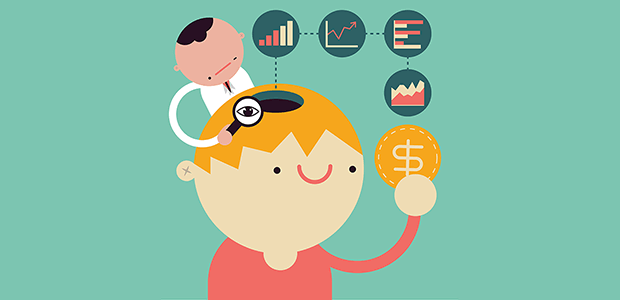
Most marketing budgets are spent on the wrong assumption. The assumption is that people choose with logic. They do not. Decisions form in the older, faster parts of the brain. Logic arrives afterward, mostly to justify what feeling already decided. Marketing psychology is the study of that gap. It explains why two identical offers convert at wildly different rates. For service businesses especially, this gap is where revenue is won or quietly lost.
The decision happens before the reasoning
Every prospect runs two systems at once. One is fast, emotional, and automatic. The other is slow, effortful, and rational. The fast system handles almost all first impressions. It judges your headline, your pricing layout, and your photos in milliseconds. By the time the rational mind engages, a verdict already exists.
This matters more than most campaigns acknowledge. You are not persuading a calculator. You are reassuring a nervous, distracted human. They want to feel safe before they feel convinced. That is why cold, feature-heavy copy underperforms. It speaks to the system that activates last.
Friction is the silent conversion killer
Cognitive load is the mental effort a task demands. Every extra form field, vague label, or confusing step raises that load. When effort rises, motivation must rise to match it. Most of the time it does not. The visitor simply leaves.
Removing friction often beats adding persuasion. A shorter form can outperform a stronger guarantee. Clear next steps can outperform a discount. The brain rewards ease, and ease feels like trust.
The principles that actually move people
A handful of cognitive biases drive most buying behaviour. Understanding them is the difference between guessing and engineering outcomes.
Loss aversion outweighs gain
People fear losing more than they enjoy winning. The pain of loss is roughly twice as strong. So “stop wasting your ad spend” often lands harder than “grow your revenue.” Framing matters because the brain weighs threats heavily. This is not manipulation. It is matching your message to how attention works.
Social proof reduces perceived risk
We look to others when we are uncertain. A crowded restaurant feels safer than an empty one. Reviews, client logos, and case studies work the same way. They quietly answer the question every prospect asks. That question is simple: have people like me trusted this before?
Anchoring shapes what feels fair
The first number a person sees defines their reference point. A $5,000 package looks reasonable beside a $12,000 option. Remove the anchor and the same price feels expensive. Pricing is therefore a psychological design problem, not just a finance one.
Why ethics is not optional here
These principles are powerful, which makes restraint essential. The same lever that builds trust can exploit it. Manufactured scarcity and fake urgency are the obvious traps. They work briefly, then poison the relationship.
This tension becomes sharper in regulated fields. Healthcare, finance, and legal services carry strict advertising rules. In Australia, health practitioners face firm limits on testimonials and outcome claims. A clever psychological hook can quietly become a compliance breach. The original article on why agencies struggle in these sectors explains this well. For a deeper breakdown, refer to this article: https://brandcom.au/why-most-marketing-agencies-fail-psychology-practices/
The lesson generalises beyond clinics. Ethical marketing psychology aligns the buyer’s interest with yours. It lowers anxiety rather than weaponising it. Short-term tricks raise conversions and refund rates together. Durable businesses optimise for the second click, not the first.
The trust gap most businesses ignore
There is a measurable distance between interest and action. Psychologists call part of this the intention-behaviour gap. Someone wants your service but never books. Nothing is broken in your offer. The breakdown is emotional and procedural.
Closing this gap rarely needs a bigger promise. It needs smaller commitments. A free audit feels safer than a sales call. A short quiz feels safer than a long form. Each tiny “yes” builds momentum toward the larger one. This is the foot-in-the-door effect, and it is reliable.
Familiarity quietly builds preference
Repeated exposure increases liking. The brain mistakes the familiar for the trustworthy. This is why consistent branding compounds over time. It is also why retargeting often works. You are not nagging the prospect. You are becoming the safe, known option in a crowded market.
How to apply this without a research lab
You do not need a psychology degree to use this. You need disciplined observation and honest testing. Start by mapping where prospects hesitate. Hesitation reveals where anxiety or effort is too high.
Then reduce one friction point at a time. Rewrite a confusing headline into a plain benefit. Replace a generic claim with a specific proof point. Move your strongest reassurance closer to the decision. Small, evidence-led changes usually beat dramatic overhauls.
Measure behaviour, not vanity. Clicks and impressions describe attention, not commitment. Bookings, enquiries, and qualified leads describe outcomes. Optimise for what pays, and let the rest stay context.
The takeaway
Marketing psychology is not a bag of tricks. It is a discipline for understanding how real decisions form. People act on feeling, then defend it with reason. They avoid loss, follow crowds, and resist effort. They commit slowly and reward those who lower their anxiety. Build your strategy around those truths and your numbers improve. Ignore them and even a generous budget underdelivers. The brain decides first. Smart marketing simply makes that decision easier and more honest.
Source: https://brandcom.au/why-most-marketing-agencies-fail-psychology-practices/