Most hotel operators frame HVAC maintenance as a comfort issue. Guests get cold, reviews suffer, problem solved by fixing the unit. That framing misses the actual financial mechanics at play. Preventative versus reactive maintenance is not a service preference. It is a capital allocation decision with measurable long-term consequences.
Understanding why requires stepping back from the guest-facing symptoms and looking at how HVAC assets actually depreciate under each approach.
Two Different Depreciation Curves
Every commercial HVAC system follows a depreciation curve from installation to replacement. Under preventative care, that curve is gradual and predictable. Components wear evenly, refrigerant charge stays correct, and compressors run within their designed tolerances for most of their service life.
Reactive maintenance produces a different curve entirely. Systems run at full stress until something fails, then get patched under time pressure. Each emergency repair addresses the immediate fault but rarely restores the system to its original operating baseline. The result is a jagged depreciation pattern, where equipment value drops in sudden steps rather than a smooth decline.
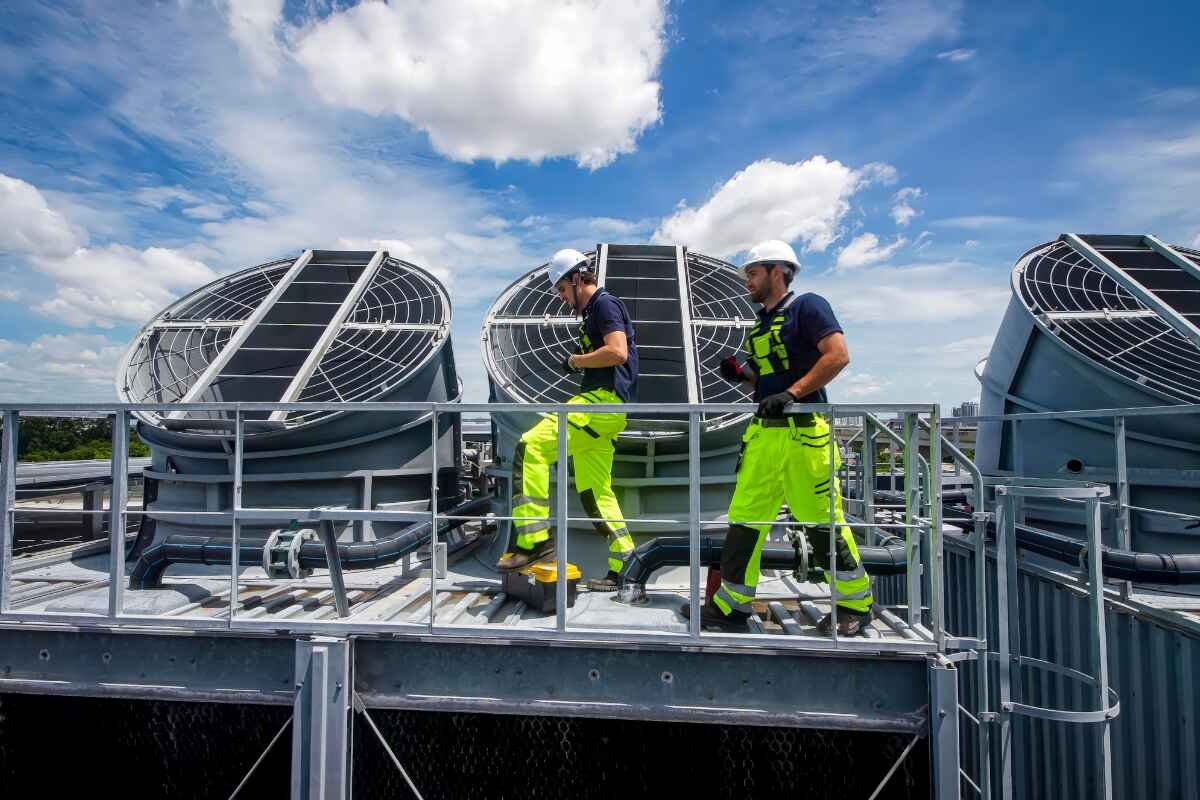
For a hotel with multiple VRV or VRF outdoor units feeding dozens of rooms, this distinction compounds. One outdoor unit failure under a reactive model can knock out climate control across an entire wing simultaneously, accelerating the effective depreciation of the whole network rather than a single component.
Why Reactive Repairs Cost More Per Dollar Spent
There is a common assumption that reactive maintenance saves money because you only pay when something breaks. This ignores how emergency repair pricing works. Urgent callouts carry premium labor rates, parts sourced under time pressure often cost more, and technicians working against a deadline are more likely to replace entire assemblies rather than repair specific faults.
Preventative maintenance, by contrast, catches faults while they are still cheap to fix. A hairline copper crack caught during a scheduled inspection is a minor repair. The same crack, left unaddressed through a freezing Gold Coast night, can become a full refrigerant leak requiring system evacuation, leak testing, and recharge — a repair that costs multiples more and takes the unit offline for days instead of hours.
The Insurance and Warranty Dimension Hotels Often Overlook
Commercial HVAC warranties frequently include maintenance clauses. Manufacturers expect documented, scheduled servicing as a condition of warranty coverage. A hotel running a reactive-only model may find major component failures excluded from warranty claims simply because no maintenance record exists to prove the system was cared for correctly.
Insurance carries a similar risk. Water damage from a failed condensate line, or business interruption claims tied to HVAC failure during peak occupancy, can be contested or reduced if the insurer determines the failure was foreseeable and preventable through standard servicing. This turns a maintenance decision into a risk transfer decision — one that many general managers never connect to their P&L until a claim is denied.
Occupancy Economics: Why Downtime Costs More Than the Repair
The direct repair bill is rarely the largest cost of a reactive failure. The larger cost is displaced revenue. A mid-winter HVAC failure across a wing of rooms does not just require refunds. It requires relocating guests, absorbing last-minute rate discrepancies with partner hotels, and managing the operational chaos of front-desk overflow during peak demand periods.
For a property running near full occupancy on a cold weekend, an unplanned multi-room outage can represent more lost revenue in a single night than an entire year of scheduled maintenance contracts. This is the calculation that should drive the decision, not the comfort narrative alone.
What a Genuine Preventative Program Should Include
Not all scheduled servicing delivers the same protection. A surface-level inspection that checks filters and confirms the unit powers on will miss the failure points that actually cause winter breakdowns — hairline cracks from thermal contraction, early-stage refrigerant loss, and compressor strain that has not yet become audible.
A program worth paying for should include refrigerant pressure testing, compressor health assessment, and physical inspection of joints and piping for stress fractures, not just a visual walk-through. This distinction between checklist maintenance and diagnostic maintenance is where most of the value gap between preventative and reactive strategies actually sits. For a deeper breakdown of what this looks like in practice for Gold Coast hotels, this article covers DEEPCHILL’s inspection approach in detail: https://deepchill.com.au/preventative-vs-reactive-maintenance-save-your-hotel-hvac/.
Making the Decision as a Financial Call, Not a Comfort Call
Hotel operators evaluating HVAC strategy should treat it the same way they treat any other capital asset decision: compare the predictable, budgeted cost of prevention against the unpredictable, compounding cost of failure. Preventative maintenance is not simply the safer option. It is the option with a known cost basis, which makes it easier to budget, forecast, and defend to ownership groups asking why maintenance spend increased this year.
Reactive maintenance, by comparison, hides its true cost across emergency callouts, warranty disputes, insurance friction, and lost occupancy revenue. Those costs rarely show up on the same line item, which is exactly why they get underestimated.
The hotels that treat HVAC maintenance as asset management, rather than guest service, are the ones protecting margin as well as reputation.
Source: https://deepchill.com.au/preventative-vs-reactive-maintenance-save-your-hotel-hvac/