The biggest mistake many dental clinics make with local SEO is assuming visibility alone will generate growth. Ranking on Google Maps matters, but visibility without trust rarely converts into booked appointments. In dentistry, patients are not casually browsing. They are searching with urgency, discomfort, anxiety, or financial caution. The clinics that consistently win local search traffic understand this emotional context far better than those simply chasing rankings.
That distinction is becoming increasingly important as local competition intensifies. In most Australian suburbs, patients searching for terms like “dentist near me,” “emergency dentist,” or “Invisalign in [suburb]” are shown dozens of similar clinics offering comparable services. The differentiator is no longer just who appears first. It is who appears most credible, most relevant, and most reassuring in the few seconds before a patient decides to call.
This is why modern dental SEO has shifted away from simplistic keyword tactics toward experience-driven local authority. The clinics generating sustainable patient acquisition are building digital ecosystems that reinforce expertise, proximity, and trust simultaneously.
For a deeper industry perspective, the breakdown from BRANDCOM explores how local SEO directly impacts nearby patient acquisition for dental clinics. Their original article can be found here: https://brandcom.au/local-seo-for-dentists-how-to-get-more-patients-nearby/
The Real Battle Happens Before Patients Visit Your Website
Many clinic owners still think of SEO as a website problem. In reality, Google increasingly treats local dental searches as a reputation evaluation problem.
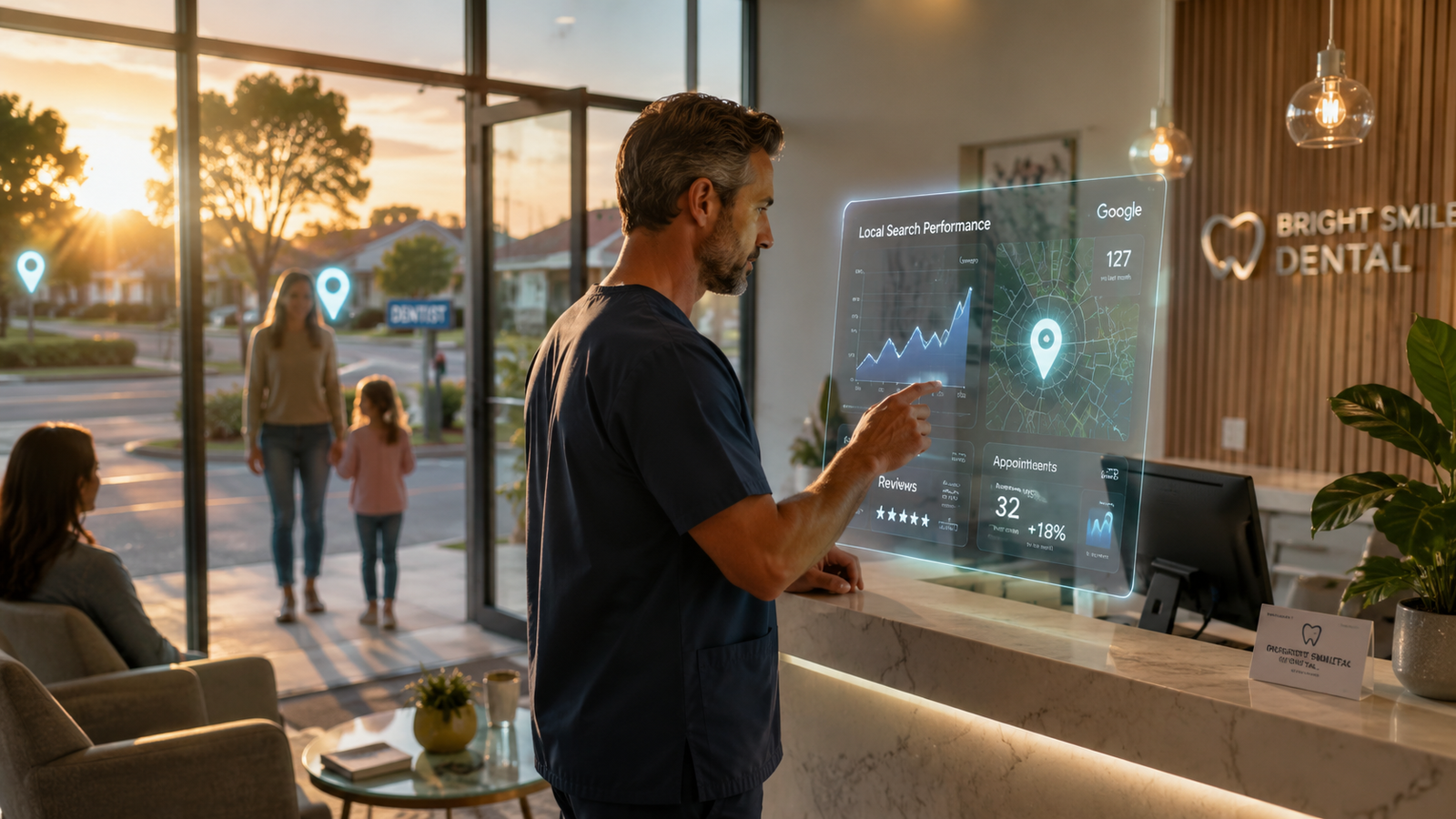
When someone searches for a dentist, Google immediately compares multiple trust indicators before deciding which practices deserve visibility. Review quality, review recency, local engagement, business profile completeness, geographic relevance, and behavioural signals now influence visibility as much as traditional website optimisation. Recent local SEO analyses across the dental industry repeatedly show that Google Business Profile activity and review management heavily influence map rankings and conversion behaviour.
Patients also behave differently than many clinics assume. They rarely search using clinical terminology. Instead, searches are emotional and symptom-based. People search for “tooth pain at night,” “broken tooth help,” or “emergency dentist open now” before they ever search for a specific treatment. Several recent SEO studies focused on dental practices highlight this behavioural shift and explain why clinics relying on generic service pages often struggle to compete.
This creates a structural advantage for clinics that build content around patient intent rather than purely around procedures. A dental website that addresses anxiety, urgency, pricing concerns, recovery expectations, and treatment confusion naturally aligns with how people actually search.
The result is stronger local engagement signals, longer visit duration, higher conversion rates, and improved visibility over time.
Google Maps Has Become the New Front Desk
For many clinics, Google Maps is now functioning as the first patient interaction point long before anyone lands on the main website.
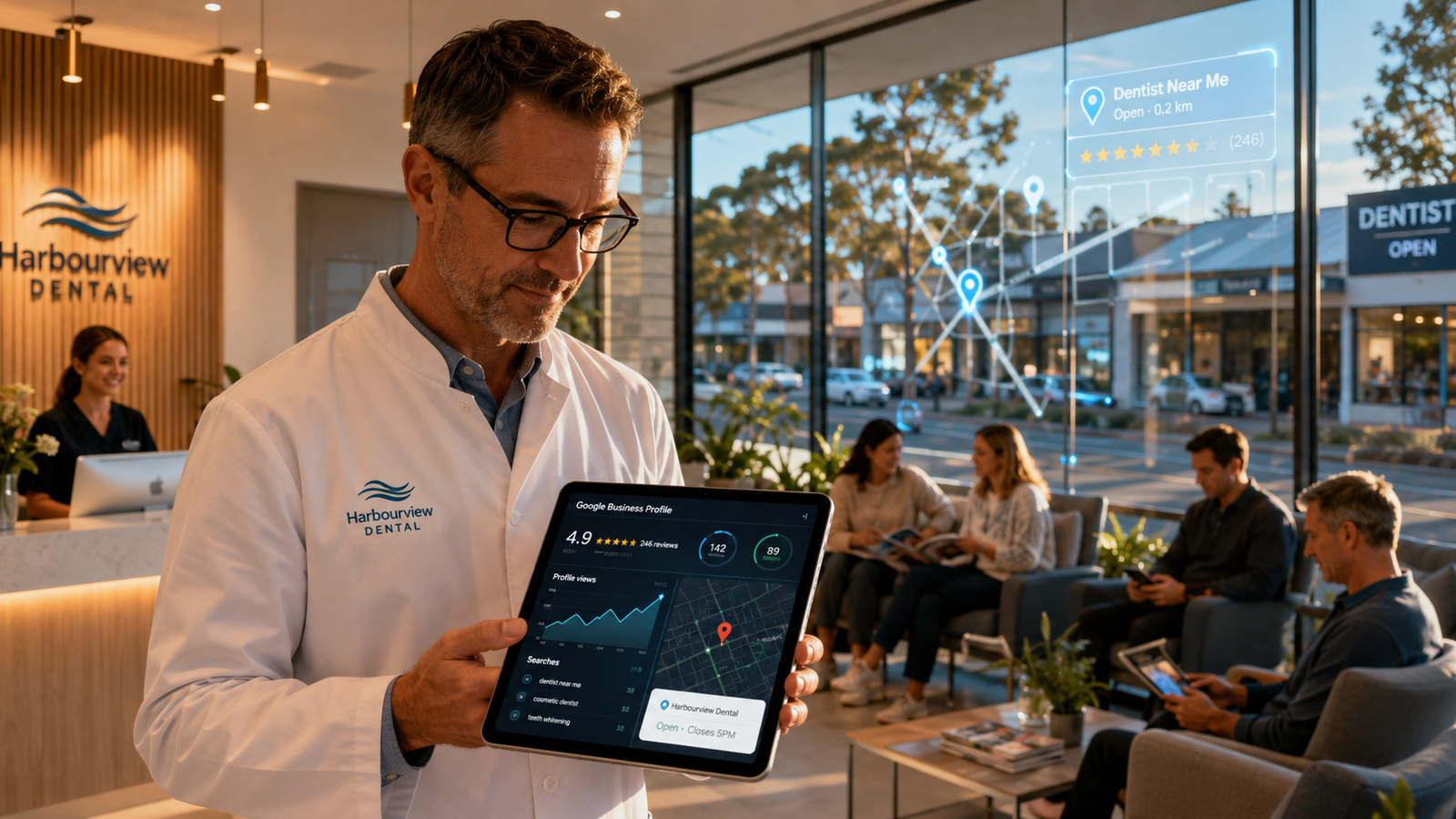
This changes how local SEO should be approached strategically. A neglected Google Business Profile no longer simply hurts rankings. It damages perceived legitimacy.
Patients make extremely fast judgments based on profile photos, review responses, booking accessibility, operating hours, and visible activity. An outdated profile silently communicates operational neglect. Meanwhile, clinics with regularly updated imagery, active review engagement, and treatment-specific profile optimisation appear more trustworthy before any direct interaction occurs.
Community discussions among local SEO practitioners consistently reinforce this point. Many report that review responsiveness, consistent profile updates, and geo-targeted service optimisation produce stronger local gains than superficial keyword stuffing.
This is particularly important in healthcare because trust compounds visibility. Once patients begin interacting positively with a clinic through reviews, clicks, calls, and navigation requests, Google increasingly interprets the business as a reliable local answer.
In practical terms, strong local SEO is no longer just about being found. It is about reducing uncertainty before a patient ever picks up the phone.
Why Generic Dental Websites Struggle to Rank
A major weakness across dental marketing is the widespread use of generic templated websites that attempt to rank for every treatment with shallow pages.
Google has become significantly better at detecting topical depth and local expertise. Thin pages built around “Dentist in Sydney” or “Teeth Whitening Melbourne” rarely create durable rankings anymore because they offer little informational value beyond basic sales language.
High-performing local clinics are increasingly investing in deeper service ecosystems. Instead of one generic cosmetic dentistry page, they develop interconnected content covering treatment suitability, recovery timelines, patient fears, pricing considerations, alternative procedures, and suburb-level intent.
This depth matters because local SEO now intersects with semantic search and AI interpretation. Google no longer evaluates isolated keywords alone. It evaluates whether a clinic genuinely demonstrates expertise around the full patient journey.
Reddit discussions from SEO professionals working with dental practices repeatedly highlight that detailed service pages and suburb-focused content consistently outperform shallow location pages.
Clinics that understand this shift are effectively building digital authority assets rather than simply publishing marketing pages.
The Clinics Winning Local SEO Are Thinking Beyond Rankings
One of the most overlooked realities in dental SEO is that rankings themselves are unstable without broader brand credibility.
Google’s local ecosystem increasingly rewards behavioural trust. If users consistently click one clinic, stay engaged, request directions, leave reviews, and convert into appointments, Google interprets that behaviour as evidence of quality.
This means patient experience now directly influences SEO performance.
Slow mobile websites, confusing booking systems, inconsistent contact details, or weak follow-up communication all indirectly weaken local search visibility over time. Several recent industry analyses note that mobile usability and engagement quality strongly influence whether clinics maintain visibility in competitive map results.
This creates a strategic divide between clinics treating SEO as a technical service and clinics integrating SEO into broader patient acquisition systems.
The highest-performing practices increasingly align local SEO with operational trust signals. Their websites feel modern, their profiles feel active, their reviews feel authentic, and their content reflects real patient concerns rather than generic marketing language.
That combination is difficult to replicate artificially.
Local SEO Is Becoming More Important as Paid Ads Become Less Efficient
Many clinics originally relied heavily on Google Ads to accelerate patient acquisition. While paid search still plays a role, rising competition and escalating click costs are making organic local visibility far more valuable long term.
Unlike paid ads, strong local SEO compounds over time. Reviews accumulate. Content expands. Authority strengthens. Geographic visibility widens. Referral signals increase.
Several recent discussions among dental marketers suggest clinics are gradually shifting focus toward sustainable organic acquisition because paid campaigns alone often struggle to create lasting momentum.
This does not mean SEO replaces advertising entirely. Instead, it changes the economics of patient acquisition. Clinics with strong local SEO can use advertising more selectively while relying on organic visibility to capture high-intent searches consistently.
In highly competitive metro areas, that advantage becomes financially significant over time.
The Future of Dental SEO Will Reward Authentic Local Authority
The future of local SEO for dentists is moving toward credibility-driven search visibility rather than purely technical optimisation.
Google’s evolving algorithms increasingly evaluate whether a clinic appears genuinely embedded within its community. Authentic reviews, locally relevant expertise, real patient engagement, and consistent digital trust signals now shape rankings more heavily than isolated SEO tricks.
Clinics that continue treating SEO as a checklist exercise may still achieve temporary gains, but sustainable visibility increasingly belongs to practices that build genuine local authority.
That is why the most effective dental SEO strategies today look less like traditional marketing campaigns and more like long-term reputation systems. They connect search visibility with patient trust, operational consistency, and local relevance in a way that feels natural both to users and to search engines.
For dental clinics trying to grow sustainably, that shift changes everything.