Choosing a reverse-cycle air conditioner for winter heating sounds straightforward until you start comparing two brands that share the same Mitsubishi name. That’s where many Australian homeowners become confused. On paper, both systems promise efficient heating, inverter technology, and long-term reliability. In practice, however, Mitsubishi Electric and Mitsubishi Heavy Industries create very different heating experiences inside a home.
The difference is not simply about temperature output. It is about how warmth feels, how quickly a room stabilizes, how airflow behaves across open-plan spaces, and how intelligently the system reacts to changing indoor conditions. These subtle distinctions matter far more than most specification sheets suggest, particularly in modern Australian homes where insulation quality, room layout, ceiling height, and lifestyle patterns vary dramatically.
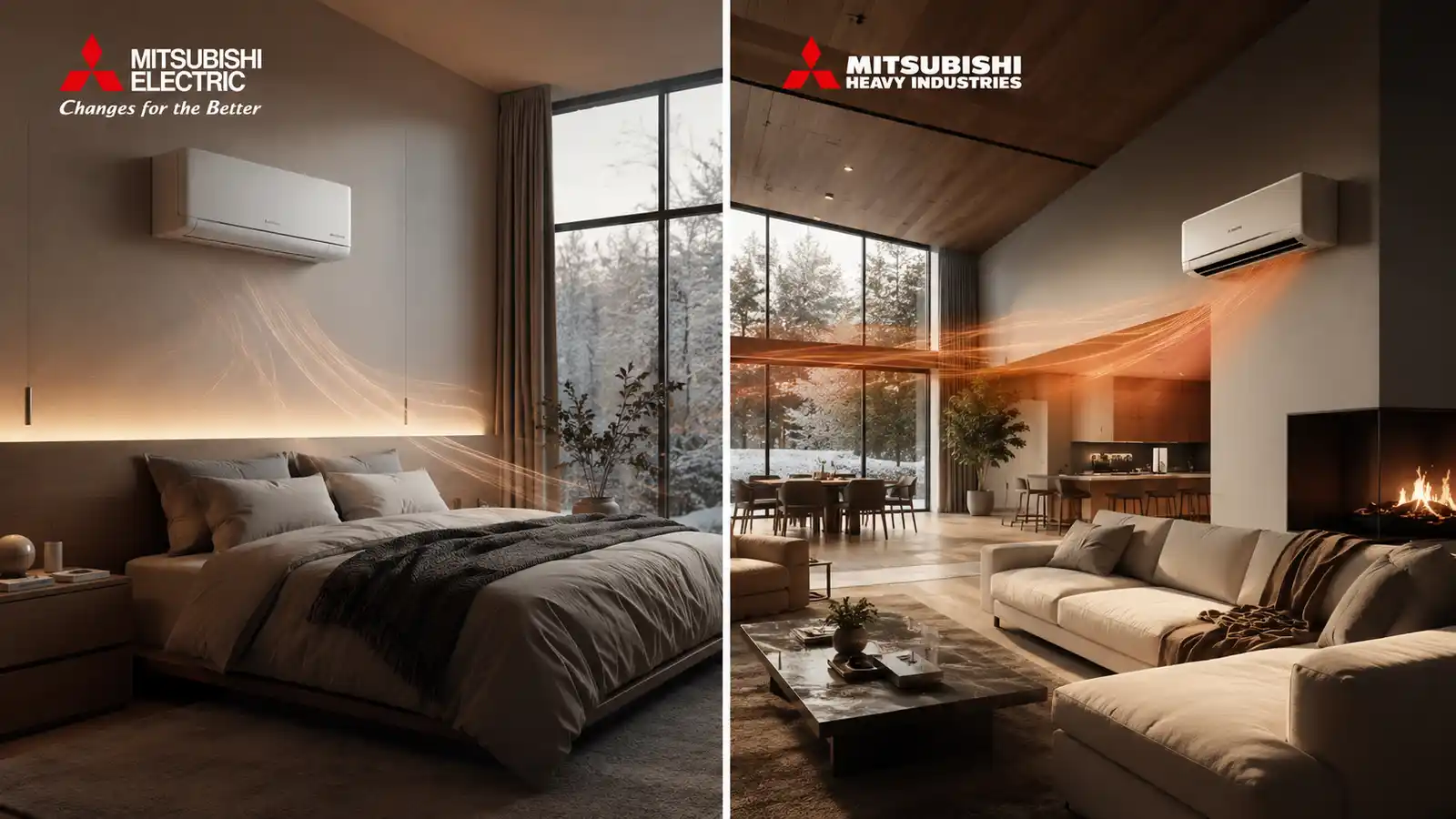
The recent comparison published by DEEPCHILL highlights the core contrast well: Mitsubishi Electric focuses heavily on balanced, sensor-driven comfort, while Mitsubishi Heavy Industries prioritizes stronger airflow and rapid heating performance. For homeowners researching the differences in detail, the original breakdown can be found here: https://deepchill.com.au/heating-mode-mitsubishi-electric-vs-mitsubishi-heavy/
The Real Difference Starts With Heating Philosophy
What separates these two manufacturers is not whether they can produce heat. Both use reverse-cycle heat pump technology that transfers warmth from outdoor air into the home, which is significantly more energy efficient than traditional electric resistance heating.
The more important distinction lies in what each company believes “comfort” should feel like.
Mitsubishi Electric tends to engineer systems around consistency and precision. The heating experience is quieter, more measured, and often less aggressive. Instead of flooding a room with noticeable blasts of hot air, the system works to stabilize the environment gradually while minimizing temperature fluctuations. This approach aligns particularly well with bedrooms, smaller living spaces, apartments, and homes where occupants spend long periods indoors.
Mitsubishi Heavy Industries takes a different path. Its systems are often designed to move larger volumes of air more quickly, making rooms feel warm sooner. In homes with expansive living areas, higher ceilings, or poor insulation, that stronger airflow can feel immediately effective. Rather than subtle temperature balancing, the emphasis is on coverage and heating momentum.
This difference becomes obvious within the first ten minutes of operation.
Why Airflow Matters More Than Heating Capacity
Many buyers become fixated on kilowatt ratings when comparing air conditioners, but airflow design frequently has a greater impact on perceived warmth. A technically powerful system can still leave parts of a room cold if air distribution is uneven.
Mitsubishi Heavy Industries has built much of its reputation around airflow engineering. Features such as Jet Air Technology and Hi-Power Mode are specifically intended to push warm air further across large spaces.
This creates a very different sensation compared to Mitsubishi Electric systems, which often prioritize directional precision instead of raw airflow force. Mitsubishi Electric’s 3D i-See Sensor technology continuously scans occupancy patterns and colder areas within a room, adjusting airflow automatically.
In practical terms, one system tries to intelligently target heat while the other tries to distribute it broadly and forcefully.
For homeowners with open-plan kitchens and connected living areas, stronger airflow can genuinely improve comfort because heat naturally struggles to remain concentrated in large volumes of space. Conversely, in smaller or enclosed rooms, overly aggressive airflow can sometimes feel less comfortable, especially overnight.
That is why installers often recommend Mitsubishi Electric for bedrooms and quieter residential zones while suggesting Mitsubishi Heavy Industries for larger communal areas.
The Psychology of Warmth Is Often Overlooked
One of the least discussed aspects of heating systems is how humans psychologically interpret comfort.
Warmth is not only about room temperature. Noise levels, airflow speed, humidity balance, and temperature stability all shape how comfortable a space feels. Two rooms measuring the exact same temperature can produce completely different comfort experiences depending on airflow behavior and acoustic presence.
Mitsubishi Electric has historically leaned into low-noise operation and refined temperature management. Its systems are frequently praised for quieter performance and subtle climate control.
Mitsubishi Heavy Industries, meanwhile, tends to create a more noticeable heating presence. Many users appreciate the immediate warmth and stronger air throw, particularly during cold mornings when rapid heat delivery matters more than subtle environmental balancing.
This is why there is no universal “winner” between the two brands. The better choice depends heavily on how a household defines comfort.
Some people want to feel warm air immediately after turning the system on. Others care more about maintaining an even indoor atmosphere without noticeable cycling or fan noise.
Smart Features Are Quietly Reshaping Heating Efficiency
Modern heating systems are increasingly judged not only by hardware performance but by how intelligently they manage energy use.
Mitsubishi Electric has invested heavily in connected ecosystem features such as MELCloud integration, occupancy sensing, and advanced automation controls. These tools allow homeowners to monitor usage patterns, adjust settings remotely, and fine-tune energy consumption in ways older systems could not support.
This becomes particularly valuable during rising electricity costs. A heating system that maintains stable temperatures efficiently often consumes less energy over time than one repeatedly surging to maximum output.
Mitsubishi Heavy Industries has traditionally focused more on mechanical performance and durability than extensive smart-home integration. While newer models continue improving in connectivity, the brand’s identity still revolves around robust heating strength rather than ecosystem intelligence.
For some homeowners, that simplicity is actually an advantage. Not everyone wants advanced automation or app-driven scheduling. In rental properties, workshops, or commercial environments, straightforward operation can sometimes be preferable to sophisticated controls.
Australian Homes Create Unique Heating Challenges
Australian climate conditions complicate the comparison further because many homes were originally designed with cooling rather than winter insulation in mind.
Large glass surfaces, open-plan layouts, tiled flooring, and inconsistent insulation create environments where heat disperses rapidly. In these situations, airflow power becomes increasingly important, which partially explains why Mitsubishi Heavy Industries maintains strong popularity among homeowners prioritizing fast warmth in larger spaces.
At the same time, urban apartments and modern architectural homes increasingly value low-noise operation, energy management, and integrated smart systems. That trend aligns closely with Mitsubishi Electric’s strengths.
The growing popularity of reverse-cycle heating across Australia reflects a broader shift toward year-round climate efficiency rather than separate cooling and heating appliances. As households become more energy-conscious, the discussion is evolving beyond simple “heating power” into questions of long-term comfort quality and operational efficiency.
The Better System Is the One That Matches Your Space
The mistake many buyers make is assuming premium HVAC brands can be judged universally. In reality, heating performance is highly contextual.
A Mitsubishi Electric system installed in a compact bedroom may feel exceptional because its quiet precision suits the environment perfectly. That same system in a massive open-plan living area may feel gentler than some homeowners expect.
Likewise, a Mitsubishi Heavy Industries unit can transform a large cold space with powerful airflow, yet feel more aggressive than necessary in smaller rooms where quieter stabilization matters more.
That is why experienced installers increasingly focus less on brand loyalty and more on usage patterns, room geometry, insulation quality, and occupant behavior. The technology gap between top-tier manufacturers has narrowed considerably. The real differentiator now is how intelligently the chosen system matches the realities of the home itself.
In many ways, the Mitsubishi Electric versus Mitsubishi Heavy discussion reflects a broader truth about modern heating design: comfort is no longer defined purely by temperature. It is defined by how naturally warmth integrates into everyday living.