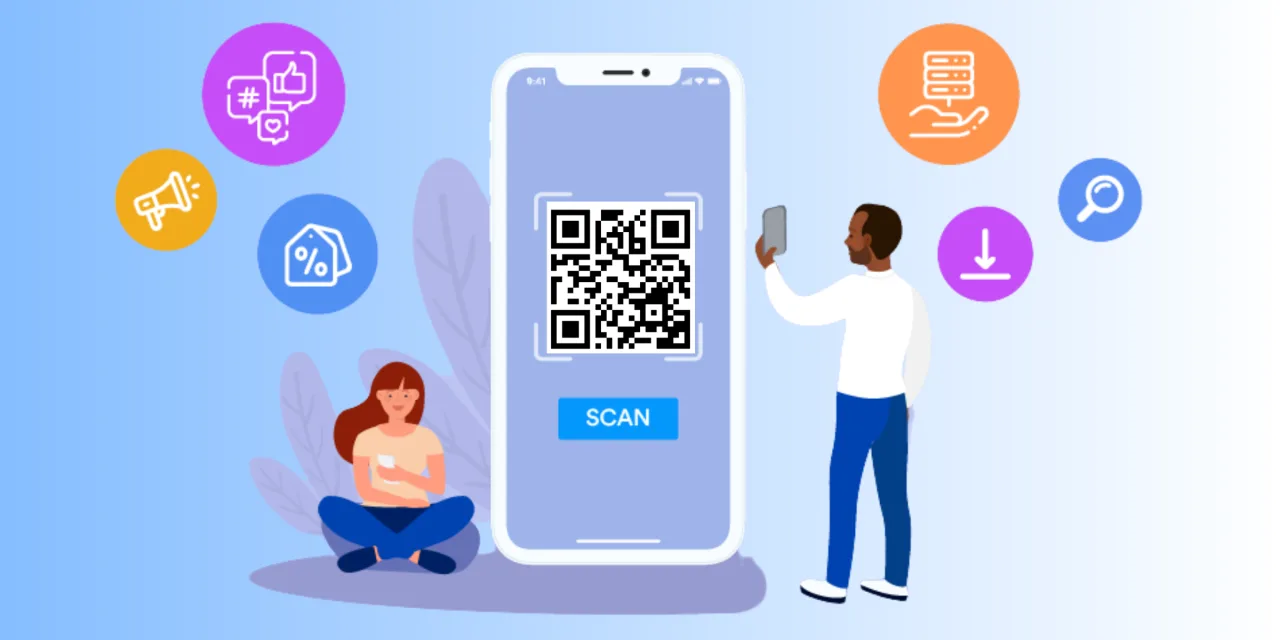
Businesses once treated QR codes as a novelty. They appeared on posters, business cards, and product packaging, but many campaigns failed because there was little strategy behind them. Today, that has changed dramatically. It is no longer just shortcuts to websites — they have evolved into a bridge between physical experiences and digital engagement.
What makes this shift important is not the technology itself, but the change in consumer behavior. People are now comfortable scanning codes in restaurants, retail stores, public transport, events, and advertisements. Smartphones have removed the friction that once made QR adoption difficult. Modern consumers expect instant access to information, and QR codes satisfy that expectation with almost no effort.
The real value for businesses lies in how QR codes compress the customer journey. Instead of asking people to remember a URL, search for a brand, or manually enter details, a single scan creates immediate interaction. That reduction in friction is what makes it powerful in modern marketing.
The Shift From Passive Advertising to Interactive Marketing
Traditional print advertising has always suffered from one major weakness: limited measurability. A flyer, billboard, or brochure could generate awareness, but businesses rarely knew what happened after someone viewed it.
QR codes change that dynamic completely.
When integrated properly, they transform offline marketing into interactive media. A printed advertisement no longer ends with exposure. It becomes the starting point of a measurable digital journey. Businesses can track scans, measure engagement, identify conversion patterns, and test campaign effectiveness across locations and demographics.
This matters because modern marketing is increasingly data-driven. Companies no longer want vague assumptions about performance. They want evidence.
A QR-enabled campaign can reveal:
- Which physical locations generate the most engagement
- What time customers scan most frequently
- Which promotions create actual conversions
- How offline campaigns influence online behavior
That level of visibility was difficult to achieve with traditional print marketing alone.
Why Convenience Has Become the Core of Customer Experience
One reason QR codes have gained long-term relevance is that they align with a larger business trend: reducing customer effort.
Consumers consistently prefer experiences that save time and eliminate unnecessary steps. Businesses that simplify interactions often outperform competitors because convenience influences purchasing decisions more than many companies realize.
QR codes support this by allowing instant access to:
- Product information
- Booking systems
- Loyalty programs
- Menus
- Payments
- Reviews
- Event registrations
- Promotional offers
The important point is not the code itself. The important point is the psychological effect of immediacy. Every additional click, search, or form field increases the likelihood of customer abandonment. QR codes reduce those interruptions.
This explains why industries such as hospitality, retail, real estate, healthcare, and events continue expanding their QR usage. The technology solves a practical business problem rather than merely adding visual novelty.
The Most Effective QR Campaigns Focus on Intent
Many businesses still misuse QR codes because they treat them as decorative add-ons instead of strategic tools.
A QR code without a clear purpose rarely performs well.
Successful campaigns usually answer one simple customer question immediately: “Why should I scan this?”
That is why effective QR marketing almost always includes a direct value proposition:
- Scan to claim a discount
- Scan to watch the demo
- Scan to book instantly
- Scan to unlock exclusive content
The clarity of the action matters more than the appearance of the code itself.
Interestingly, marketers discussing QR campaigns online often point out that businesses prioritize reliability and usefulness over artistic customization. Many users simply want the code to work instantly without confusion. In practice, surrounding context and call-to-action messaging influence scan rates more than visual experimentation.
This highlights a broader marketing lesson: utility often outperforms aesthetics when customers are trying to complete a task quickly.
QR Codes Are Quietly Improving Omnichannel Marketing
One of the biggest challenges businesses face is connecting physical and digital customer experiences seamlessly.
Consumers move constantly between environments:
- They discover products offline
- Research online
- Compare prices on mobile
- Purchase through apps
- Return to physical stores later
QR codes help unify those disconnected touchpoints.
For example, product packaging can lead customers to tutorial videos, warranty registration, loyalty programs, or reorder pages. Store signage can connect directly to online inventory. Event posters can drive immediate ticket purchases.
This creates continuity across the customer journey.
For a deeper breakdown, refer to this article: https://brandcom.au/why-businesses-should-use-qr-codes-in-marketing/
The businesses benefiting most from QR codes are not necessarily the ones using them everywhere. They are the ones using them intentionally at moments where customer hesitation usually occurs.
The Hidden Risk Businesses Often Ignore
Despite their advantages, QR codes are not automatically effective.
One overlooked problem is long-term maintenance. Many businesses generate dynamic QR codes through subscription-based platforms without realizing that expired subscriptions can break printed campaigns permanently. A dead QR code damages trust because customers encounter friction precisely where convenience was expected.
This reveals an important operational lesson: QR codes are part of infrastructure, not temporary graphics. Businesses need governance around link management, analytics, testing, and maintenance.
Security also matters. Customers are becoming more aware of phishing risks associated with malicious QR redirects. Businesses that use branded domains, secure landing pages, and transparent messaging build greater consumer confidence over time.
Why QR Codes Will Continue Growing
The future of QR marketing is less about the codes themselves and more about what they enable.
As businesses compete for shorter attention spans, faster conversions, and better attribution data, QR codes solve multiple problems simultaneously:
- They reduce friction
- Improve tracking
- Connect offline and online behavior
- Support personalization
- Increase interaction speed
What once looked like a temporary pandemic-era habit has become integrated into everyday consumer behavior. The technology survived because it aligned with permanent shifts in how people interact with brands.
Businesses that understand this are no longer asking whether they should use QR codes. They are asking where QR codes can remove friction most effectively within the customer journey.
That distinction changes everything.
Source: https://brandcom.au/why-businesses-should-use-qr-codes-in-marketing/