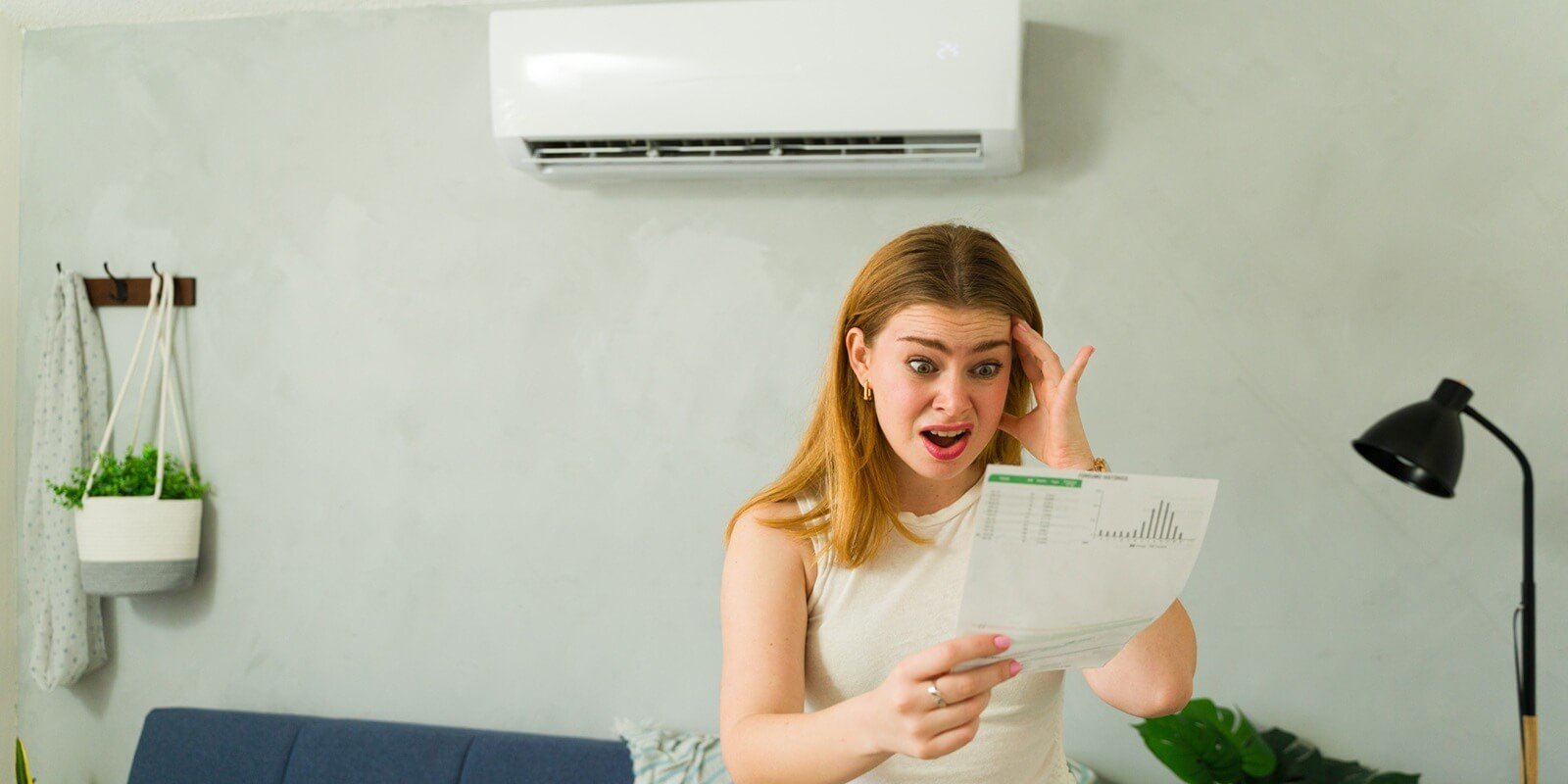
Most people read a high aircon electricity bill as a single number. They see the total, wince, and pay it. That number is actually a signal. It tells you how much energy your system burns to produce one degree of comfort. When the bill climbs but your habits stay the same, the maths has shifted underneath you.
This article takes a different approach to the usual list of causes. Instead of naming symptoms, it shows you how to read your own running cost. Once you understand the economics, you can tell whether the problem is behaviour, weather, or a system quietly losing efficiency.
Efficiency Is a Ratio, Not a Feature
Every reverse-cycle unit has a Coefficient of Performance. This is the heat it delivers divided by the electricity it consumes. A COP of four means four units of warmth for one unit of power. That ratio is the real driver of your bill, far more than the hours you run.
The catch is that the rated COP is measured in a laboratory. Real performance on the Gold Coast depends on outdoor temperature, airflow, and the condition of the unit. As conditions move away from ideal, the ratio falls. Your bill rises even though the system “works” exactly as before.
This is why a five-year-old unit can cost noticeably more than its first winter. The hardware has not broken. It has simply slipped down the efficiency curve, and nobody noticed because comfort stayed the same.
Why Winter Punishes the Ratio
In heating mode, your unit harvests warmth from cold outside air. The colder that air, the less heat is available to extract. The compressor compensates by working longer and harder to hit your target temperature.
A small drop in outdoor temperature can shave several points off real-world COP. Each lost point means the same warm room now costs more to maintain. Gold Coast winters are mild, but clear mornings still drag efficiency down sharply.
Separating Behaviour From Hardware
Before blaming the machine, isolate the human factor. Three behaviours inflate winter bills more than people expect, and all three are free to fix.
The first is over-heating. Setting twenty-five degrees instead of twenty roughly doubles the work the system must do. The second is heating empty rooms through open zones. The third is running the unit all night when a timer would do.
If your bill rose but none of these changed, the cause is more likely physical. That distinction matters. It decides whether you adjust a remote or call a technician, and it stops you spending money on the wrong fix.
A Simple Self-Audit
You can estimate your aircon’s share without special tools. Note your daily power use across a mild week when the unit barely runs. Then compare it with a cold week of heavy heating. The difference is roughly your heating cost.
If that gap is widening year on year for similar weather, efficiency decay is the prime suspect. For a deeper breakdown of the specific faults behind that decay, refer to this article: https://deepchill.com.au/why-are-your-aircon-electricity-bill-so-high-in-winter/
Where the Money Actually Leaks
Efficiency rarely collapses overnight. It erodes through small, compounding faults that each tax the COP a little.
A clogged filter forces the fan to fight for airflow. Dirty coils insulate the heat exchanger, so less warmth transfers per cycle. Low refrigerant from a slow leak cripples the unit’s ability to move heat at all. None of these stops the system. Each one makes every hour more expensive.
The reason these go unseen is psychological. The unit still blows warm air, so it feels fine. The cost shows up only on the bill, weeks later, disconnected from the cause. By then most people assume electricity prices simply rose.
The Compounding Problem
These faults do not add up neatly. They multiply. A dirty filter plus dirty coils plus slightly low refrigerant can together push running cost up far more than any single fault alone.
This is why a unit can suddenly seem to “cost too much.” Several minor issues crossed a threshold at the same time. The fix is rarely one big repair. It is usually the removal of several small drags on efficiency.
Deciding Between Service, Repair, and Replace
Once you think in ratios, the spending decision becomes clearer. Cleaning and refrigerant checks restore lost COP cheaply. They are maintenance, and they pay for themselves through lower bills.
A failing compressor or a chronic leak is different. Here you weigh repair cost against a new unit’s higher base efficiency. A modern inverter system often recovers its price through running savings, especially in a heavy-use home.
The mistake is treating every high bill as a replacement trigger. Most cost creep is recoverable. Replacement only makes sense once the efficiency gap is too wide for servicing to close.
The Real Takeaway
A high aircon electricity bill is feedback, not a verdict. It measures the gap between the comfort you want and the efficiency your system can still deliver. Behaviour widens that gap quickly. Neglect widens it slowly and silently.
Reading the bill this way changes how you respond. You stop guessing and start diagnosing. You fix the cheap things first, measure the result, and only escalate when the numbers justify it. That habit keeps both comfort and cost under your control through every Gold Coast winter.
Source: https://deepchill.com.au/why-are-your-aircon-electricity-bill-so-high-in-winter/