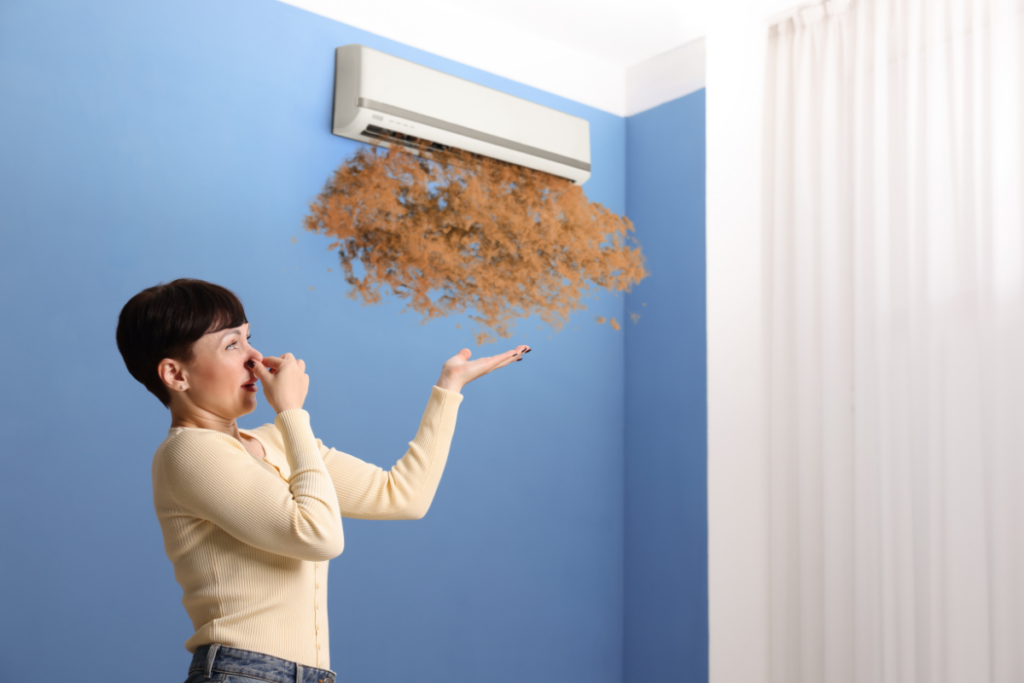
As temperatures drop, many households switch their air conditioners from cooling to heating without a second thought. For some, the transition is seamless. For others, the first blast of warm air comes with an unpleasant surprise: a strange smell that fills the room within minutes.
While many people assume an unusual odour is simply a normal part of using the heating mode after months of inactivity, persistent smells often tell a much more important story. They can indicate accumulated dust, trapped moisture, microbial growth, blocked drainage, or components that have been quietly deteriorating throughout the cooling season.
Rather than treating unpleasant odours as an inconvenience to tolerate, homeowners can view them as an early warning system. In many cases, the smell appears long before performance drops or costly mechanical failures occur. Understanding what those warning signs mean allows small maintenance issues to be addressed before they become expensive repairs.
For homeowners wanting a detailed explanation of common heating-mode odours, DeepChill provides a practical guide here: https://deepchill.com.au/aircon-smells-bad-when-heating-stop-guest-complaints/
Why Heating Mode Makes Hidden Problems More Noticeable
Reverse-cycle air conditioners spend months removing heat and moisture from indoor air during summer. Even when operating correctly, dust gradually settles inside filters, evaporator coils collect fine debris, and moisture creates an environment where bacteria and mould can slowly develop.
When winter arrives and the system begins producing warm air instead of cool air, the higher temperatures often amplify these hidden contaminants. Warm airflow carries odours much more effectively than cool air, making problems that were barely noticeable during summer suddenly obvious.
This is why many homeowners experience an unpleasant smell only after switching to heating mode. The heating function is rarely the cause itself—it simply exposes conditions that have already developed inside the system.
Different Smells Often Point to Different Issues
Not every unpleasant odour has the same cause, and recognising the difference can help determine whether simple maintenance is sufficient or professional servicing is required.
A dusty smell that disappears after a short period is commonly caused by dust that accumulated while the unit sat unused. This is generally harmless if it fades quickly after the first few heating cycles.
Musty or damp smells, however, deserve more attention. They often suggest moisture has remained inside the indoor unit long enough for mould or bacteria to grow. Because these microorganisms circulate through the airflow, they may affect indoor air quality as well as comfort.
A burning smell presents a different situation altogether. While a faint odour during the first few minutes of seasonal use can result from dust heating on electrical components, any strong, persistent, or worsening burning smell should never be ignored. Electrical faults, overheating components, or damaged wiring require immediate inspection by a qualified technician.
Understanding these distinctions helps homeowners avoid both unnecessary worry and potentially dangerous delays.
Indoor Air Quality Is Part of Home Comfort
Many people think of an air conditioner primarily as a temperature-control appliance, but it also has a significant influence on the quality of the air circulating throughout the home.
When filters become clogged or biological contaminants develop inside the unit, every heating cycle distributes those particles back into occupied spaces. While healthy occupants may simply notice an unpleasant smell, people with allergies, asthma, or respiratory sensitivities may experience increased irritation.
This connection between HVAC maintenance and indoor air quality has become increasingly important as Australians spend more time indoors during winter. Comfortable temperatures lose much of their value if the air itself feels stale or unpleasant.
Routine servicing helps maintain not only efficient heating performance but also a cleaner indoor environment for everyone in the household.
Small Maintenance Habits Prevent Larger Problems
One reason unpleasant odours become widespread is that air conditioning systems often receive attention only after something appears wrong.
In reality, many common heating issues develop gradually over many months. Filters slowly collect dust. Drainage systems accumulate debris. Condensation leaves behind moisture. Fans gather fine particles that remain hidden until heating mode begins.
Simple preventative maintenance interrupts this cycle before contamination becomes significant.
Cleaning filters according to the manufacturer’s recommendations, keeping outdoor units free of debris, ensuring adequate airflow around indoor units, and arranging periodic professional servicing all contribute to better performance throughout the year.
Preventative care is usually far less expensive than waiting until airflow declines, components fail, or persistent odours require extensive cleaning.
Why Professional Servicing Goes Beyond Filter Cleaning
Homeowners can safely clean accessible filters, but much of the air conditioning system remains inaccessible without specialised equipment.
Professional technicians inspect evaporator coils, blower fans, drainage systems, electrical components, refrigerant performance, and other internal areas where contamination commonly develops. Many odour-related problems originate in these hidden sections rather than the filters alone.
Servicing also provides an opportunity to identify worn components before they fail during periods of heavy heating demand. Detecting issues early often reduces repair costs while extending the overall lifespan of the system.
Rather than viewing professional maintenance as an unnecessary expense, it can be considered an investment in long-term reliability and energy efficiency.
Guest Comfort Matters More Than Many Property Owners Realise
For landlords and short-term accommodation providers, unpleasant air conditioner odours create more than a maintenance issue—they influence guest perception.
Visitors often notice unusual smells immediately upon entering a room. Even if the heating system continues operating normally, a musty or stale odour may lead guests to question the overall cleanliness of the property.
In competitive accommodation markets, comfort extends beyond clean linens and attractive interiors. Quiet operation, fresh indoor air, and reliable climate control contribute significantly to positive guest experiences and online reviews.
Addressing heating-related odours before winter bookings begin helps maintain both guest satisfaction and property reputation.
Seasonal Maintenance Protects Efficiency and Reliability
Heating season provides an ideal reminder that reverse-cycle air conditioners require year-round care rather than seasonal attention only after problems emerge.
Systems that receive regular inspections generally maintain stronger airflow, consume energy more efficiently, and experience fewer unexpected breakdowns during periods of peak demand. Just as importantly, they provide cleaner, fresher indoor air throughout winter.
For homeowners, businesses, and accommodation providers alike, unusual smells should be treated as valuable diagnostic clues rather than normal inconveniences. Responding early allows relatively minor maintenance issues to be resolved before they affect comfort, efficiency, or system longevity.
For additional guidance from DeepChill on identifying and resolving heating-mode air conditioner odours, visit: https://deepchill.com.au/aircon-smells-bad-when-heating-stop-guest-complaints/